Sensory Toys for Babies: The Complete Guide to Supporting Your Child’s Neural Development
Your baby’s brain is performing an extraordinary feat. From birth through the first years, it’s building neural connections at an astonishing rate—over one million per second at peak periods. This neural development doesn’t happen in isolation; it’s driven by sensory experiences. Every touch, sound, sight, smell, and taste contributes to brain architecture that will serve your child throughout life. Sensory toys for babies aren’t luxuries or entertainment—they’re essential tools that support this critical developmental process.
Understanding Sensory Development
Before diving into specific toys, it’s important to understand what sensory development means and why it matters so profoundly.
Humans experience the world through five basic senses—touch, hearing, sight, smell, and taste—plus two additional senses crucial for development: proprioception (body position awareness) and vestibular sense (balance and spatial orientation). Babies are born with all these senses functioning, though some are more developed than others at birth.
The first three years are a critical period for sensory integration—the brain’s process of organizing sensory information to use effectively. During this time, repeated sensory experiences strengthen neural pathways while unused connections are pruned away. This “use it or lose it” principle means the sensory experiences you provide during infancy literally shape your baby’s brain structure.
Children with rich sensory experiences during these formative years typically show enhanced cognitive abilities, better emotional regulation, improved motor skills, and more sophisticated problem-solving capabilities. Conversely, limited sensory input during critical periods can result in permanent developmental challenges.
The Five Categories of Sensory Toys
Effective sensory toys target different sensory systems. Understanding these categories helps you provide balanced stimulation.
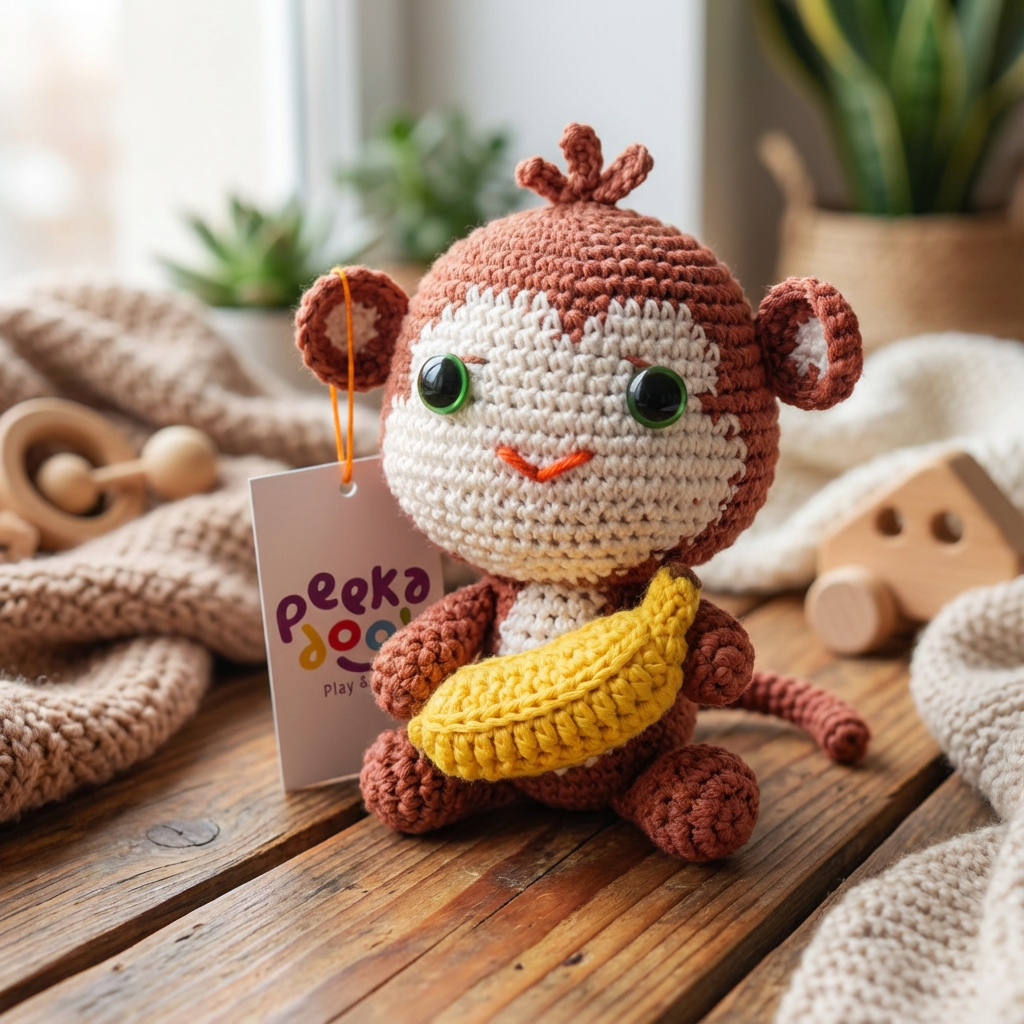
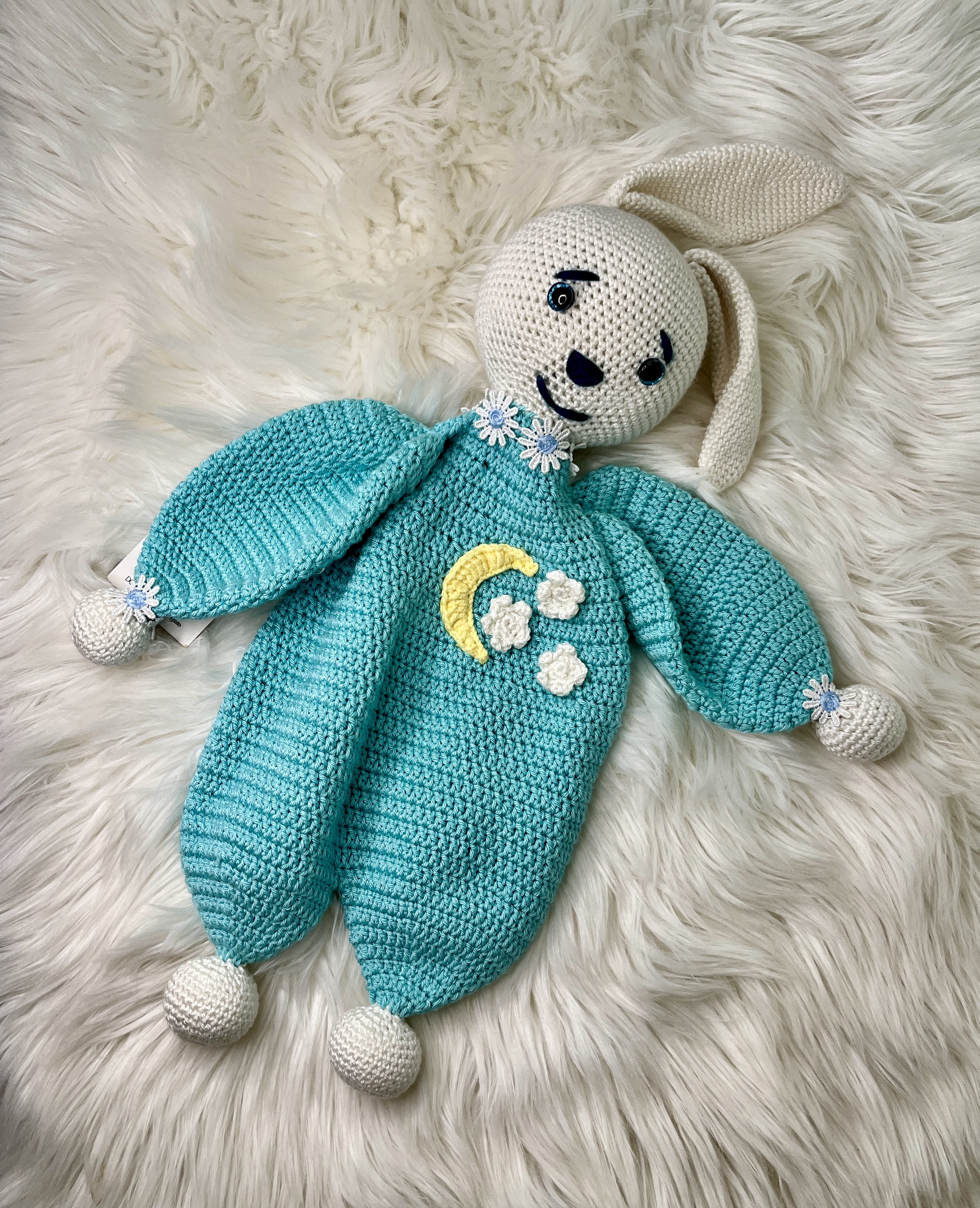
Tactile Toys: These engage the sense of touch through varied textures. Babies need exposure to soft and rough, smooth and bumpy, firm and squishy textures. Each distinct texture provides unique information that helps babies understand their physical world. Natural materials like cotton, bamboo, wool, and wood offer more varied tactile experiences than uniform plastic surfaces. Handmade crochet toys are exceptional tactile tools because the inherent texture of the stitches creates countless small variations.
Auditory Toys: Sound-producing toys support hearing and auditory processing development. The key is variety and appropriateness—babies benefit from gentle sounds, rhythmic sounds, and varied pitches, but harsh or loud noises can damage sensitive hearing or cause distress. Natural materials create softer, more pleasant sounds than plastic. Rattles with organic fillings, crinkle toys with paper elements, and musical toys with quality sound production all serve auditory development.
Visual Toys: While newborns have limited vision, visual development progresses rapidly. High-contrast patterns, bright colors, and interesting shapes all support this development. Toys that move or have reflective elements encourage visual tracking—the foundation for later reading skills. However, balance is important; overly stimulating visual toys can overwhelm babies rather than engaging them productively.
Oral Sensory Toys: Everything goes in babies’ mouths, and this serves an important developmental purpose. Oral exploration provides crucial sensory information and supports pre-feeding skill development. Teething toys, textured rattles, and safe natural rubber toys all facilitate healthy oral sensory development. Safety is paramount here—toys must be large enough to prevent choking, free from harmful chemicals, and thoroughly cleanable.
Proprioceptive and Vestibular Toys: These support body awareness and balance. Toys that encourage reaching, grasping, pulling, and pushing all provide proprioceptive input. Activities that involve movement—being rocked, bounced gently, or carried while you move—stimulate the vestibular system. While not traditional “toys,” items like baby carriers and gentle movement activities are crucial sensory tools.
Age-Appropriate Sensory Toys
Sensory needs change dramatically during the first year. Providing age-appropriate toys ensures optimal challenge without frustration or understimulation.
0-3 Months: During this stage, babies primarily experience sensory input passively. They need high-contrast visual patterns, gentle sounds, and soft textures against their skin. Simple rattles they can accidentally activate, soft security blankets, and mobiles with contrasting colors work well. Handmade crochet toys in black and white or other high-contrast colors are perfect for this stage.
3-6 Months: Intentional interaction begins. Babies start reaching for and grasping objects. They bring everything to their mouths for oral exploration. They can track moving objects visually. Sensory toys for this stage should be easy to grasp, safe to mouth, and provide clear cause-and-effect (shake it, hear sound). Textured balls, crinkle toys, and rattles with varied surfaces engage multiple senses simultaneously.
6-9 Months: Sitting independently opens new possibilities. Babies can manipulate toys with both hands, transfer objects between hands, and explore toys more deliberately. They’re developing preferences and will repeatedly choose favored toys. Sensory baskets with varied items, stacking toys, and more complex textured objects support this stage. Natural materials become increasingly important as oral exploration intensifies.
9-12 Months: Babies approach toddlerhood with dramatically improved motor skills. They can crawl or cruise, which expands their sensory world significantly. They understand object permanence and enjoy hide-and-seek games. Sensory toys can be more complex, including nesting items, shape sorters, and toys that produce varied sounds based on different interactions. Handmade items with hidden surprises—tags to pull, flaps to open, textures to discover—captivate babies at this stage.
Natural Materials: The Sensory Advantage
The materials used in sensory toys profoundly impact their developmental value. Natural materials offer significant advantages over synthetic alternatives.
Texture Variety: Natural materials have inherent texture variation that synthetics lack. Wood grain, cotton fiber irregularities, wool texture—these natural variations provide richer tactile information than smooth plastic. Even within a single natural material, subtle differences exist between pieces, offering diverse sensory input.
Temperature Properties: Natural materials feel warmer to the touch than plastic or metal. They respond to body heat differently, providing thermoreceptive information that contributes to sensory development. Wood toys warm slightly when held; cotton items conform to body temperature. These subtle cues help babies understand their physical relationship with objects.
Weight and Density: Natural materials have satisfying weight and density that help babies understand cause and effect and develop proprioception. A wooden block provides different feedback than a plastic one when dropped. Cotton-filled toys have pleasing heft that helps babies gauge their grip strength and movement force.
Chemical Safety: Natural materials like organic cotton, bamboo, and untreated wood don’t leach harmful chemicals even during intense oral exploration. This safety allows parents to confidently provide sensory experiences without constant worry about chemical exposure.
Sensory Complexity: Natural materials engage multiple senses simultaneously more effectively than synthetics. A handmade cotton toy has visual interest, textured feel, subtle natural scent, gentle sound if it contains filling, and even slightly varied taste compared to plastic. This multi-sensory engagement builds more complex neural connections.
The Role of Open-Ended Sensory Play
The most effective sensory toys share a common characteristic—they’re open-ended, meaning they don’t dictate exactly how to play. This openness is crucial for optimal development.
Battery-operated toys that light up, make specific sounds, and “teach” particular concepts actually limit sensory exploration. They tell babies what response is correct and when to respond. This seems educational but actually reduces creative thinking, problem-solving, and self-directed learning.
Open-ended sensory toys—simple balls, textured blocks, crochet animals, stacking rings—allow babies to explore at their own pace and in their own way. They can be shaken, mouthed, thrown, stacked, sorted, or used in imaginary play. This versatility means a single toy provides varied experiences over time as the baby’s abilities develop.
Research consistently shows that children with access to simple, open-ended toys demonstrate more creative play, longer attention spans, and better problem-solving skills than children primarily exposed to electronic or single-purpose toys. The developmental value lies not in what the toy does, but in what the child can do with it.
Creating a Sensory-Rich Environment
While specific toys matter, the overall environment plays an equally important role in sensory development.
Sensory Baskets: Create baskets with varied safe items for supervised exploration—wooden spoons, soft fabric squares, natural rubber balls, crinkle paper. Rotation keeps the basket interesting without overwhelming babies with too many choices at once.
Texture Walks: Even pre-walking babies benefit from experiencing different floor textures. Carry your baby or encourage crawling over carpet, hardwood, tile, and safe outdoor surfaces. Describe what they’re experiencing to build language connections.
Sound Exploration: Provide opportunities to hear varied sounds throughout the day—running water, rustling leaves, gentle music, your voice in different tones. Identify sounds explicitly—”That’s the water running” or “We’re hearing birds singing.”
Natural Light Variation: While toys support visual development, the quality of light matters too. Exposure to natural light variation throughout the day—bright morning sun, softer afternoon light, gentle evening dimness—supports circadian rhythm development and visual processing.
Safe Oral Exploration: Accept that everything will be mouthed and plan accordingly. Provide toys specifically designed for safe oral exploration rather than constantly redirecting this developmentally appropriate behavior.
The Montessori Approach to Sensory Development
Maria Montessori’s educational philosophy offers valuable insights into sensory development that parents can apply at home.
Montessori emphasized providing carefully chosen, high-quality materials that isolate specific sensory experiences. Rather than overwhelming children with complex, multi-featured toys, offer simpler items that allow focused exploration of individual senses.
The Montessori approach also values natural materials, believing they provide authentic sensory experiences that support genuine understanding. A wooden toy teaches the real weight, texture, and properties of wood—information that translates to understanding the wider world. Plastic toys provide no such authentic learning.
Additionally, Montessori advocated for uninterrupted concentration time. When babies engage with sensory toys, resist the urge to constantly redirect or “teach.” Allow self-directed exploration, intervening only for safety. This respectful approach builds focus, confidence, and intrinsic motivation.
Sensory Processing Challenges
While most babies process sensory information typically, some experience sensory processing challenges that make certain inputs overwhelming or insufficient.
Babies with sensory sensitivities may find normal sounds distressing, dislike certain textures, or become overwhelmed by visual stimulation. These children benefit from carefully calibrated sensory experiences that gradually expand their comfort zones without forcing.
Conversely, some babies are sensory-seeking—they need more intense input to register sensation. These children benefit from toys providing strong tactile, auditory, or proprioceptive input.
If you suspect sensory processing challenges, consult with a pediatric occupational therapist who specializes in sensory integration. Early intervention can make tremendous differences in long-term outcomes.
Handmade Sensory Toys: The Artisan Advantage
Mass-produced sensory toys flood the market, but handmade alternatives offer distinct advantages worth considering.
Handmade toys typically use superior natural materials carefully chosen for sensory properties. Artisans who understand child development select textures, weights, and sounds intentionally rather than focusing purely on cost efficiency.
The slight variations inherent in handmade items provide sensory richness that perfect machine consistency cannot match. Each stitch in a crochet toy creates micro-variations in texture. Each handmade wooden toy has unique grain patterns. This natural variation provides more complex sensory information than uniform mass production.
Handmade toys often combine multiple sensory elements thoughtfully. A handmade rattle might feature crochet texture for touch, natural filling for gentle sound, contrasting colors for visual interest, and organic materials safe for oral exploration—all in one carefully designed item.
Practical Considerations
Integrating sensory toys effectively requires balancing developmental ideals with practical realities of daily life.
Rotation System: Rather than making all toys available constantly, rotate them every few days. This maintains novelty and interest while preventing overwhelming clutter. Store inactive toys out of sight to make “new” discoveries exciting.
Cleaning and Maintenance: Sensory toys see intensive use. Choose items that can be thoroughly cleaned. Natural fiber toys that are machine washable simplify hygiene maintenance. Establish regular cleaning routines to maintain safety.
Investment vs. Cost: Quality sensory toys cost more initially but provide superior value through durability, safety, and developmental appropriateness. Consider cost-per-use over the months or years an item will be used rather than just the initial price.
Observation and Response: Watch how your baby interacts with different sensory toys. Their preferences and engagement patterns reveal their current developmental needs and interests. Use these observations to guide future selections.
Conclusion: Sensory Toys for Babies
Sensory toys for babies represent far more than entertainment. They’re tools for building the neural architecture that will support your child’s learning, thinking, and functioning throughout life. The sensory experiences you provide during these critical early years literally shape your baby’s brain.
Choosing sensory toys thoughtfully—prioritizing natural materials, open-ended design, safety, and age-appropriateness—maximizes developmental benefits. While the toy market offers endless options, focus on quality over quantity. A few exceptional sensory toys used regularly provide more value than dozens of mediocre alternatives.
Your baby’s sensory development is both profound and simple—it requires only appropriate experiences offered consistently with love. Through sensory play, you’re not just entertaining your baby; you’re building their brain.
Why Us
Skill-Building Design
Handmade toys and essentials that support fine motor skills, hand-eye coordination, and sensory play.
Natural & Safe Materials
Soft, breathable cotton and bamboo yarns—gentle on babies and made with care.
Impact With Every Purchase
We empower women artisans and create responsible products aligned with key SDGs.