Rattle for Newborns: Why This Simple Toy is Essential for Your Baby’s Development
Introduction
In an age of high-tech baby gear and sophisticated developmental toys, the humble rattle might seem almost quaint. Yet pediatricians, child development experts, and occupational therapists consistently emphasize that a quality rattle is one of the most important toys you can give your newborn. This isn’t nostalgia or tradition speaking—it’s science. The simple rattle provides precisely the right type of stimulation at exactly the right developmental stage, making it an irreplaceable tool for your baby’s growth.
The Science Behind the Rattle
To understand why rattles matter so much, we need to understand newborn development. Your baby enters the world with reflexes but limited voluntary control. Over the first months, they gradually gain intentional control over movements, develop sensory processing abilities, and begin understanding cause and effect relationships. A rattle supports all these critical developmental processes.
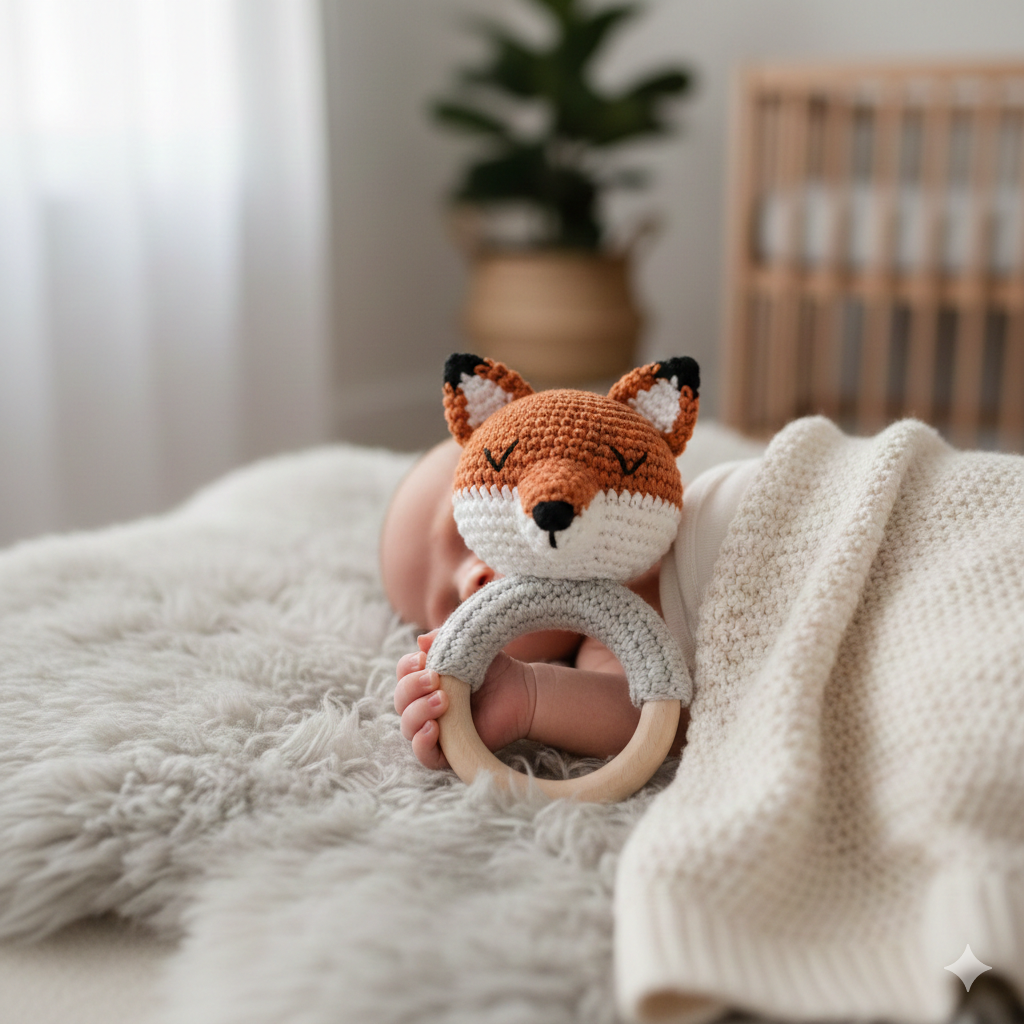
When a newborn accidentally grasps a rattle through their palmar grasp reflex, they experience several simultaneous sensations—the weight in their hand, the texture against their skin, and the sound when they move. Their brain begins forming connections between these sensory inputs. Over time, they learn that their actions create results—shake hand, hear sound. This seems simple, but it’s foundational learning that underlies all later understanding of how the world works.
Research in early childhood development has demonstrated that babies who regularly interact with simple sensory toys like rattles show more advanced fine motor skills, better hand-eye coordination, and enhanced problem-solving abilities compared to babies with limited sensory toy exposure. The rattle isn’t just entertainment—it’s a developmental tool.
Choosing the Right Rattle for Your Newborn
Not all rattles offer equal developmental benefits. Understanding what makes an effective newborn rattle helps you choose wisely among countless options.
Size and Weight: Newborn rattles should be lightweight enough for tiny hands to manipulate but substantial enough to provide sensory feedback. Extremely lightweight rattles don’t give babies enough information about their grip and movement. Overly heavy rattles frustrate babies who can’t yet control significant weight. The ideal rattle weighs between 1-3 ounces and features a handle sized for newborn hands—typically about 1 inch in diameter.
Shape: The best first rattles have a straight or slightly curved handle that babies can grasp easily. Complex shapes with multiple attachments can be wonderful for older babies but overwhelm newborns still learning basic grasping. Simple shapes focus attention on the fundamental skill you want to develop—grasping and shaking.
Sound Quality: The sound a rattle makes profoundly impacts its effectiveness. Harsh, loud noises can startle and distress newborns with sensitive hearing. The ideal rattle produces a gentle, pleasant sound at moderate volume. Natural filling materials like dried organic rice, beans, or small bells create sounds without the harsh plastic quality of many manufactured rattles.
Material Safety: Since everything goes in a baby’s mouth, material safety is paramount. Natural materials like organic cotton, bamboo, untreated wood, and natural rubber are inherently safer than plastic alternatives that may contain BPA, phthalates, or other concerning chemicals. These natural materials also provide superior sensory experiences with varied textures that stimulate tactile development.
Visual Interest: While newborns have limited vision initially, they can see high-contrast patterns and bright colors. Rattles incorporating these visual elements support visual development and help babies learn to track moving objects. However, overly busy designs can be overstimulating—balance is key.
Washability: Rattles will be dropped, drooled on, and generally subjected to constant baby handling. Choose rattles that can be thoroughly cleaned. Handmade cotton or bamboo rattles are typically machine washable, making hygiene easy to maintain.
Developmental Milestones and Rattle Use
Understanding how rattle interaction changes as your baby develops helps you maximize this simple toy’s benefits throughout the first year.
0-2 Months: Initially, your newborn’s interaction with rattles is reflexive. When you place a rattle in their hand, the palmar grasp reflex causes fingers to close around it. They hold the rattle briefly but without intention. During this stage, provide rattles frequently to strengthen this reflex and help babies become aware of their hands.
2-4 Months: Babies begin intentional grasping around 2-3 months. They start understanding that they can make the rattle sound happen by moving their hand. This discovery is thrilling for them, and you’ll notice increasing interest in rattles as they practice this new skill repeatedly. The repetition builds neural pathways and strengthens the hand and arm muscles needed for later skills.
4-6 Months: Hand-eye coordination improves dramatically during this period. Babies begin deliberately reaching for rattles they see, transferring them between hands, and bringing them to their mouths for oral exploration. This sophisticated coordination between visual input, motor planning, and execution represents major developmental achievement.
6-9 Months: Babies now manipulate rattles with considerable skill. They shake them vigorously, bang them on surfaces to explore different sounds, and use them in early cause-and-effect experiments. The rattle becomes a tool for learning about their physical world.
9-12 Months: Advanced skills emerge as babies approach toddlerhood. They might shake a rattle rhythmically in response to music, use it to point at objects, or incorporate it into simple pretend play. The rattle remains valuable throughout this entire first year, adapting to their developing abilities.
The Benefits Beyond Motor Skills
While fine motor development is the most obvious benefit of rattle play, these simple toys support development in surprisingly diverse ways.
Cognitive Development: Each time a baby shakes a rattle and hears the sound, they’re learning about cause and effect—one of the most fundamental cognitive concepts. They learn that their actions have predictable results, and they can intentionally create those results. This understanding becomes the foundation for more complex problem-solving later.
Auditory Processing: The gentle sounds of a quality rattle help babies develop auditory discrimination skills. They learn to distinguish the rattle sound from other environmental noises, locate sound sources by turning toward them, and eventually understand that different actions (shaking hard versus gently) create different sound intensities.
Spatial Awareness: As babies move rattles through space, they begin understanding concepts like near and far, up and down. They learn about their body’s relationship to the space around them—critical spatial reasoning that underlies later mathematical thinking.
Bilateral Coordination: Transferring a rattle from one hand to the other requires both sides of the body and brain to work together. This bilateral coordination is essential for virtually all later skills, from tying shoes to writing.
Focus and Attention: Engaging with a rattle teaches babies to focus attention on a task. While their attention spans are brief initially, regular practice with engaging toys like rattles gradually extends focus duration.
Handmade vs. Mass-Produced Rattles
The rattle market offers everything from $2 plastic versions to $50 designer options. Understanding the differences helps you invest wisely.
Material Quality: Mass-produced plastic rattles often contain concerning chemicals and create harsh sounds. Handmade rattles crafted from natural materials are inherently safer and provide superior sensory experiences. The slightly uneven texture of crochet, the natural grain of wood, or the subtle variations in natural rubber all provide richer tactile information than smooth plastic.
Sound Quality: Handmade rattles using natural fillings create gentler, more pleasant sounds than plastic versions. The softer sound profile is less likely to startle or distress sensitive babies while still providing clear auditory feedback.
Sustainability: Plastic rattles contribute to environmental problems and can’t be biodegraded. Natural material rattles, especially those handcrafted from organic cotton or bamboo, align with values of environmental stewardship and sustainability.
Durability: Quality handmade rattles often outlast cheap plastic alternatives. While the initial cost may be higher, durability means they serve multiple children and can even become family heirlooms.
Uniqueness: Each handmade rattle has slight variations that make it unique. This individuality reflects the human touch in its creation, something that can’t be replicated by machines.
Safety Considerations
While rattles are generally safe toys, awareness of safety standards ensures your baby’s protection.
Size Standards: Rattles must be large enough that they can’t fit entirely in a baby’s mouth. Safety standards require that baby toys not fit through a cylinder 1.25 inches in diameter and 2.25 inches deep—representing the size of a baby’s throat.
No Small Parts: Any decorative elements must be securely attached with no possibility of detachment. For babies under three, embroidered features are safer than sewn-on buttons or plastic safety eyes.
Sound Level: Rattles should produce sounds at safe decibel levels. Extended exposure to loud sounds can damage developing hearing. Quality rattles create gentle sounds well below concerning levels.
Washability: Since rattles inevitably end up in mouths, thorough cleaning is essential. Choose rattles that can be completely cleaned or sanitized.
Regular Inspection: Even the best-made rattle requires periodic inspection for wear, damage, or loose components. Check rattles regularly and replace any that show signs of deterioration.
Incorporating Rattles into Daily Routines
Maximizing a rattle’s developmental benefits involves more than simply handing it to your baby.
Tummy Time Enhancement: Place rattles just out of reach during tummy time to encourage reaching and weight shifting. The visual and auditory interest motivates babies to strengthen neck and upper body muscles.
Interactive Play: Don’t just give babies rattles—play with them too. Shake the rattle where your baby can see it, then pause to encourage their anticipation. This turn-taking is an early form of conversation that supports social development.
Sensory Exploration: Describe what your baby is experiencing—”You’re hearing the gentle sound,” or “That feels bumpy, doesn’t it?” This language exposure builds vocabulary and helps babies connect words with sensory experiences.
Rotation: Rather than providing all rattles at once, rotate them every few days. This maintains novelty and interest while preventing overstimulation.
The Cultural History of Rattles
Rattles have soothed and entertained babies across virtually every human culture for thousands of years. Ancient Egyptian tombs contain rattles made from gourds and clay. Native American rattles used natural materials like shells and seeds. This universal presence across cultures and time speaks to rattles’ inherent developmental appropriateness.
Modern understanding of child development now explains scientifically what parents have known intuitively for millennia—rattles provide exactly the right stimulation at exactly the right developmental stage. This convergence of ancient wisdom and modern science should give parents confidence in the simple rattle’s value.
Beyond Fancy Alternatives
In a market saturated with electronic toys promising enhanced learning, remember that developmental research consistently shows simple toys promote deeper engagement and more creative play than their high-tech counterparts. A rattle doesn’t need batteries, screens, or programming to be profoundly effective. Its simplicity is its strength.
Babies don’t need complexity—they need appropriate challenges that match their developmental stage. A rattle provides that perfect match, growing with your baby as they develop new skills and understanding.
Conclusion: Rattle for Newborns
In our modern rush to give children every advantage, we sometimes overlook the wisdom embedded in traditional practices. The rattle has endured not despite its simplicity but because of it. This unassuming toy supports physical, cognitive, sensory, and even social-emotional development in ways that far exceed its humble appearance.
Choosing a quality rattle for your newborn—particularly one handmade from natural materials with attention to safety and developmental appropriateness—is an investment in their fundamental development. It’s recognition that sometimes the oldest solutions remain the best solutions, and that development doesn’t require complexity, just appropriate stimulation offered with love.
Why Us
Skill-Building Design
Handmade toys and essentials that support fine motor skills, hand-eye coordination, and sensory play.
Natural & Safe Materials
Soft, breathable cotton and bamboo yarns—gentle on babies and made with care.
Impact With Every Purchase
We empower women artisans and create responsible products aligned with key SDGs.