Personalized Baby Presents: Creating Keepsakes That Tell Each Child’s Unique Story
Introduction
Every baby enters the world as an individual with their own story beginning to unfold. Personalized baby presents honor this uniqueness, transforming functional items into cherished keepsakes that celebrate the child’s identity and place in their family. Unlike generic gifts that could belong to any baby, personalized presents say “this was made specifically for you”—a powerful message even before the child understands words. These customized items often become treasured possessions that families keep long after their practical use ends, carrying memories and marking important milestones in ways mass-produced alternatives simply cannot.
The Emotional Power of Personalization
Personalized gifts create emotional connections and lasting memories that extend far beyond their physical properties.
Identity Affirmation: From birth, children begin forming their sense of self. Items bearing their name, birth details, or other personal information affirm their unique identity and importance. This validation, though subtle, contributes to developing self-concept and belonging.
Family Connection: Personalized items often incorporate family names, heritage elements, or significant dates that connect children to their broader family story. These links to family history help children understand where they come from and who they belong to.
Lasting Memories: Parents treasure personalized items as tangible reminders of precious early days. A blanket embroidered with birth details becomes a memory anchor—years later, seeing it recalls those first overwhelming, joyful, exhausting weeks with clarity that ordinary items cannot evoke.
Heirloom Potential: Personalized pieces naturally become family heirlooms because they’re inherently irreplaceable. You can purchase another generic toy, but you cannot replace the wooden puzzle spelling your child’s name that sat in their nursery. This irreplaceability makes personalized items obvious candidates for preservation and eventual passing down.
Thoughtfulness Signal: Personalization requires extra effort—you must provide information, wait for custom creation, and invest more than clicking a mass-produced option. Recipients recognize this additional effort as evidence of care and consideration, strengthening relationships and creating gratitude beyond the item itself.
Categories of Meaningful Personalized Baby Presents
Personalization possibilities span virtually every category of baby items, each offering distinct advantages.
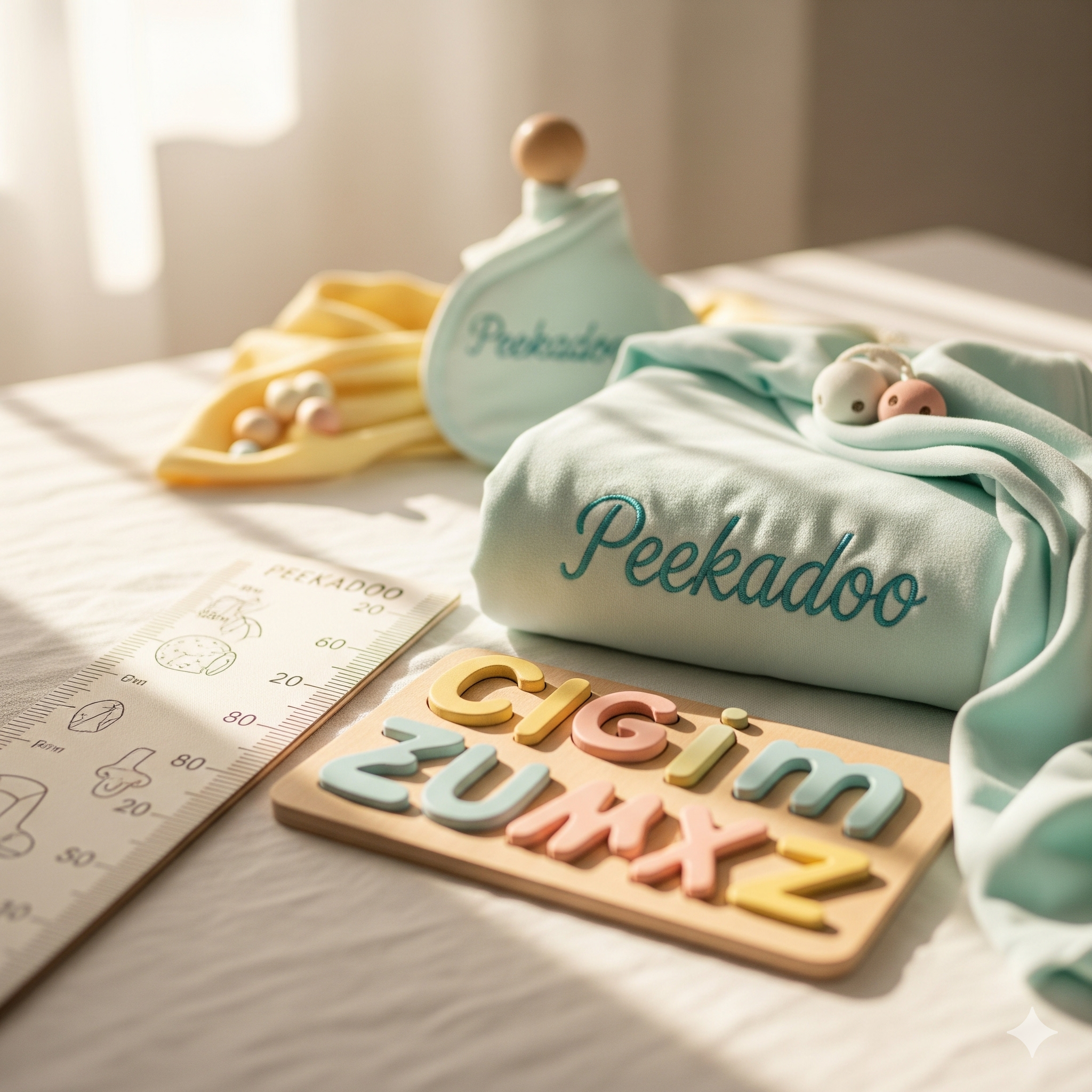
Name-Based Items: The most common personalization involves adding the baby’s name. Wooden name puzzles help toddlers learn to recognize and spell their names while providing tactile play. Name signs for nursery doors or walls become decorative elements that also serve as daily name recognition practice. Blankets, clothing, or towels embroidered with names transform everyday items into special possessions.
Birth Detail Keepsakes: Items commemorating specific birth information—date, time, weight, length—create permanent records of that momentous day. Birth announcement prints, growth charts with birth stats, or custom storybooks incorporating these details become treasured family records.
Initial and Monogram Items: For families preferring subtlety or wanting items that grow with children, monogrammed pieces provide personalization without full names. Classic and elegant, monograms work across ages and styles.
Custom Illustrations: Personalized artwork featuring the child—custom portraits, illustrated name prints, or storybooks with the child as protagonist—create unique pieces that celebrate the individual child while providing aesthetic value for nurseries.
Heritage and Cultural Elements: Personalization can incorporate family heritage through traditional patterns, language elements, or cultural symbols. For Egyptian families, for example, items featuring hieroglyphic name translations or traditional geometric patterns connect children to their cultural roots.
Handprint and Footprint Items: Preserving tiny handprints or footprints in clay, on canvas, or incorporated into jewelry creates deeply personal keepsakes marking how small these precious ones once were. These items become increasingly poignant as children grow.
Custom Storybooks: Personalized books placing the child as the story’s main character make reading time special and encourage engagement. Hearing their own name in stories helps children connect more deeply with reading.
Photo Items: Blankets, books, or nursery décor incorporating family photos personalize spaces with familiar, comforting faces while celebrating family bonds.
Balancing Personalization with Practicality
The most successful personalized gifts combine meaningful customization with genuine usefulness.
Functional First: The best personalized items serve real purposes rather than being purely decorative. A personalized organic cotton blanket provides warmth while carrying the child’s name. A custom growth chart tracks height while becoming a keepsake. This dual functionality ensures items are used and treasured rather than stored and forgotten.
Age Appropriateness: Consider how long personalization remains relevant. Items appropriate across many years—name puzzles, growth charts, storybooks—provide extended value. Conversely, items useful only briefly may not justify personalization investment.
Aesthetic Longevity: Choose personalization styles that age well. Classic fonts and timeless designs remain appealing as tastes evolve. Overly trendy personalization may date quickly, reducing long-term value.
Practical Maintenance: Personalized items should be as easy to care for as their non-personalized counterparts. If washing removes personalization or special care is required to preserve it, practical use suffers.
Quality Matters More with Personalization
Because personalized items carry extra significance and often higher costs, quality becomes especially important.
Durability Requirements: Personalized items should last long enough to justify the customization investment. Cheap products with personalization may initially cost less but provide poor value if they deteriorate before the personalization can be meaningfully appreciated.
Customization Quality: Examine how personalization is applied. Is embroidery tight and even? Is engraving clean and deep enough to remain legible long-term? Are printed elements fade-resistant? Quality customization justifies premium prices.
Base Product Excellence: Personalization cannot compensate for poor quality base products. A beautifully embroidered name on a poorly constructed toy still results in a substandard gift. Ensure the underlying item meets high standards independent of personalization.
Thoughtful Personalization Approaches
How you personalize matters as much as what you personalize.
Cultural Sensitivity: When incorporating cultural elements, ensure accuracy and appropriateness. Consult with cultural community members if you’re personalizing with elements outside your own background. Respect and authenticity matter more than decorative appeal.
Privacy Considerations: Some parents prefer not displaying children’s full names publicly for privacy and safety reasons. Consider using just first initials, nicknames, or birth dates for items used in public settings.
Spelling Accuracy: This seems obvious, but verify spelling carefully before finalizing personalization. Incorrect spelling on personalized items creates permanent disappointments rather than treasured keepsakes.
Meaningful Dates: If including dates, consider which ones matter most. Birth date is obvious, but due date, adoption finalization date, or naming ceremony date might carry equal or greater significance depending on family circumstances.
Inclusive Language: For families with diverse structures, ensure personalization language respects their reality. “Parents” rather than “Mommy and Daddy,” inclusive family configurations, and sensitivity to various family forms demonstrates awareness and respect.
Working with Artisans for Custom Pieces
Many personalized baby presents come from skilled artisans who create custom work.
Communication Clarity: Provide clear, complete information about desired personalization. Include spelling, preferred fonts or styles, placement preferences, and any elements you specifically want included or avoided.
Timeline Understanding: Custom work requires time. Order personalized gifts well before needed—baby showers, births, or special occasions. Rush fees for expedited work quickly increase costs.
Proofing Process: Reputable custom makers provide proofs or mockups before final creation. Review these carefully and approve only when completely satisfied. Changes after production may be impossible.
Artisan Collaboration: The best custom work often emerges from collaboration. Share your vision but remain open to artisan suggestions based on their expertise. They understand what works aesthetically and practically in ways customers may not.
Price Considerations
Personalized baby presents typically cost more than comparable non-personalized items. Understanding these costs helps with budgeting and value assessment.
Customization Fees: Beyond base product costs, personalization adds labor and sometimes materials. Hand embroidery requires significant time. Engraving needs equipment and expertise. These value-adding services justify additional charges.
Smaller Production Runs: Personalized items cannot benefit from mass production economies of scale. Each piece requires individual attention and setup, increasing per-unit costs compared to producing hundreds of identical items.
Value Proposition: While more expensive initially, personalized items often provide better long-term value through extended use and heirloom potential. A $60 personalized blanket treasured for decades offers better value than a $20 generic one discarded after months.
Personalization for Different Relationships
How you personalize gifts might vary based on your relationship with the family.
Close Family and Friends: Those closest to the family can incorporate more intimate personalization—family surnames, cultural heritage details, or private jokes and references that carry special meaning.
Acquaintances and Colleagues: More formal personalization works better here—the baby’s first name, birth date, or universally appropriate symbols and patterns. Avoid overly familiar customization that might seem presumptuous.
Self-Gifting Parents: Parents purchasing personalized items for their own babies can include whatever details matter to them—full names, middle names, special nicknames, or complex family connections.
Common Personalization Pitfalls
Avoiding common mistakes ensures personalized gifts delight rather than disappoint.
Over-Personalization: Covering every surface with names or dates can feel overwhelming rather than special. Strategic, selective personalization often creates more impact than excessive customization.
Trend-Chasing: Personalization in currently trendy styles may date quickly. Classic approaches age better and maintain appeal as tastes evolve.
Assumption About Preferences: Don’t assume parents want their child’s full name publicly displayed or that specific nicknames are preferred. When in doubt, ask or choose subtler personalization options.
Ignoring Siblings: If personalizing for a family with multiple children, consider whether siblings need matching items. Creating personalized pieces for one child while excluding others can create hurt feelings.
Timing Personalized Gifts
When you give personalized presents affects their impact and usefulness.
Pre-Birth Gifts: Some personalization can be completed before birth using family surname, due date, or “Baby [Surname]” placeholder approaches. This allows shower giving while maintaining personalization.
Post-Birth Gifts: Waiting until after birth enables full personalization with name, exact birth details, and definite information. This delay doesn’t diminish impact—families appreciate thoughtful personalized gifts whenever they arrive.
Milestone Occasions: First birthdays, naming ceremonies, or religious occasions provide perfect opportunities for personalized gifts commemorating these specific moments.
Digital vs. Physical Personalization
Modern technology offers personalization options beyond traditional methods.
Digital Printing: Allows complex designs, photographs, and detailed graphics impossible with traditional techniques. Works well for wall art, photo books, and blankets.
Traditional Techniques: Embroidery, engraving, hand-painting—these methods create tactile, durable personalization with artisanal quality that digital methods cannot match.
Hybrid Approaches: Combining digital design with handmade execution creates optimal results—precise planning with artisanal execution quality.
Personalizing for the Future
Some personalized items serve purposes that emerge only as children grow.
Growth Documentation: Items tracking height or recording milestones become increasingly valuable over years. These grow in sentimental worth as children age.
Time Capsule Elements: Personalized items including birth-era details—newspaper headlines, popular songs, cultural moments—create fascinating historical records that gain interest as children mature.
Legacy Messages: Some personalized items can include messages to future adult versions of the child—advice, hopes, or simply documentation of how much they were loved from the start.
Conclusion: Names, Dates, and Lasting Love
Personalized baby presents transform ordinary items into extraordinary keepsakes. They say “you matter enough for something made just for you.” They connect children to family, heritage, and the specific moment they entered the world. They create tangible reminders that every child is unique and valued.
Whether simple name embroidery on organic cotton or complex custom artwork, whether traditional techniques or modern digital methods, personalization adds layers of meaning that transcend the functional purpose of items themselves.
In choosing personalized baby presents, we acknowledge that this child is not just any baby but this specific, irreplaceable individual whose story deserves to be told, remembered, and celebrated.
Why Us
Skill-Building Design
Handmade toys and essentials that support fine motor skills, hand-eye coordination, and sensory play.
Natural & Safe Materials
Soft, breathable cotton and bamboo yarns—gentle on babies and made with care.
Impact With Every Purchase
We empower women artisans and create responsible products aligned with key SDGs.