Handmade Baby Gifts: The Irreplaceable Value of Items Crafted with Care
Introduction
In an age where you can order anything with a tap and have it delivered tomorrow, handmade baby gifts stand as counter-cultural statements about what we truly value. Each stitch, each carved curve, each carefully placed detail represents human time, skill, and intention that no algorithm can replicate and no factory can mass-produce. Handmade gifts carry stories—of the artisan who created them, the traditional techniques passed through generations, the care invested in every element. They connect giver, maker, and recipient in ways that transcend the transactional nature of most modern commerce. For new parents navigating overwhelming choices about what to bring into their baby’s world, handmade gifts offer clarity: these items were made with genuine care for the child who will use them.
The Intrinsic Value of Handmade
What makes handmade baby gifts special isn’t romantic nostalgia—it’s genuine, measurable value that factory production cannot match.
Human Connection: Every handmade item connects you to the person who created it. Unlike anonymous factory production, handmade goods carry the artisan’s energy, skill, and intention. Many artisan businesses share photos and stories of their makers, allowing you to know whose hands crafted your gift. This human connection adds emotional dimension that mass production lacks.
Superior Quality: Artisans stake their reputation on each item. Unlike factory workers racing to meet quotas, makers invest care in quality because their name attaches to the finished product. This results in superior construction, attention to detail, and durability that justify higher prices through extended use.
Unique Character: No two handmade items are identical. Slight variations in stitching, grain patterns in wood, or color intensity in hand-dyed fibers make each piece one-of-a-kind. This uniqueness means your gift is truly irreplaceable rather than interchangeable with thousands of identical products.
Cultural Preservation: Many handmade items incorporate traditional techniques passed through generations. Supporting these crafts helps preserve cultural heritage that might otherwise disappear under pressure from mass production. Your purchase contributes to keeping traditional skills alive.
Environmental Responsibility: Handmade production typically has smaller environmental footprints than mass manufacturing. Lower energy consumption, minimal waste, local or regional material sourcing, and absence of large-scale industrial processes all reduce environmental impact.
Categories of Exceptional Handmade Baby Gifts
Handmade options exist across every category of baby items, each offering distinct advantages over factory alternatives.
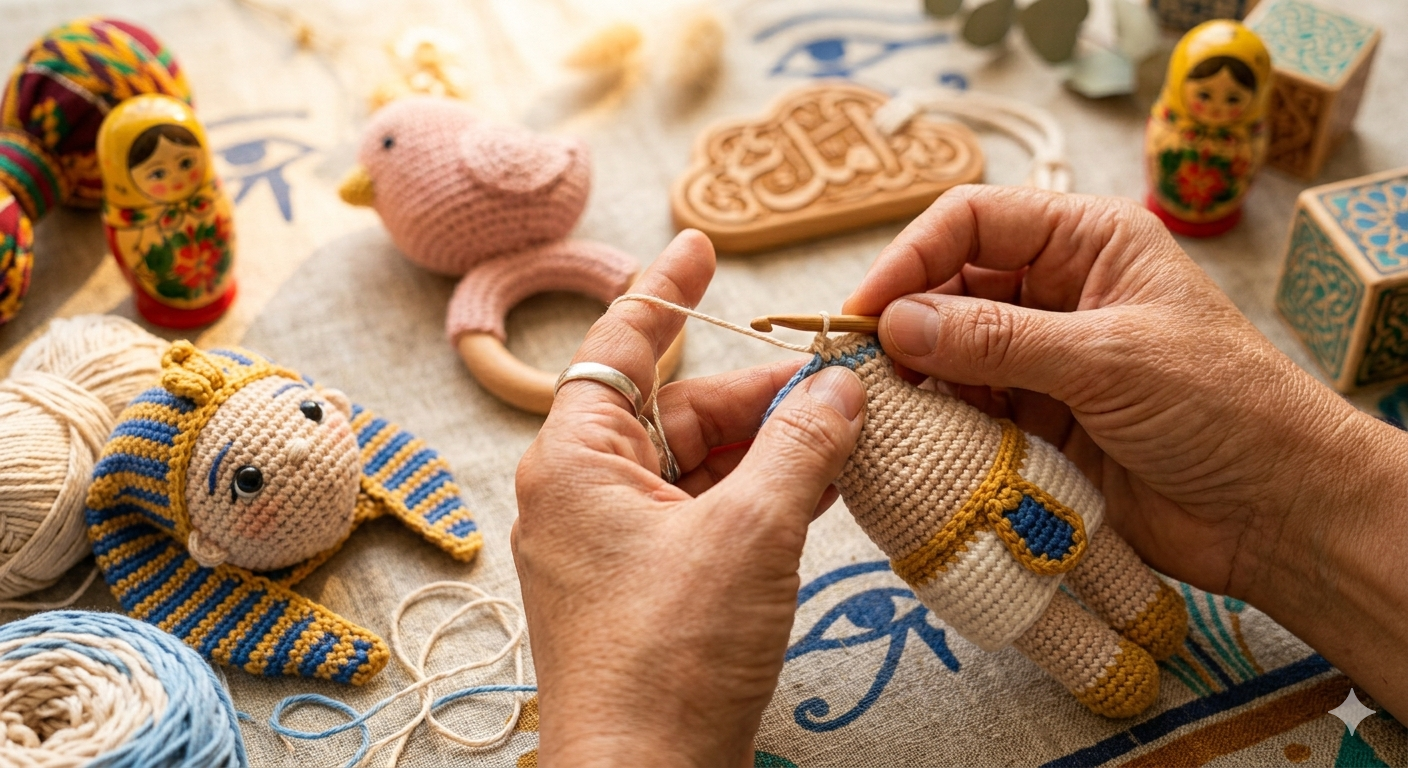
Crochet and Knit Items: Handmade textile work represents perhaps the most accessible and versatile category. Crochet rattles, knitted blankets, crocheted stuffed animals, or knitted clothing all provide superior softness, appropriate sizing for baby hands, and varied textures supporting sensory development. Peekadoo specializes in handmade crochet toys using organic cotton and bamboo—each item carefully crafted by women artisans in Egypt who employ traditional techniques while creating developmentally appropriate toys for modern babies.
Wooden Toys: Hand-carved or handcrafted wooden toys offer durability, beauty, and authentic sensory experiences. The natural grain patterns, satisfying weight, and warm feel of wood provide developmental benefits that plastic cannot match. Handmade wooden rattles, teething rings, blocks, or puzzles become treasured items often lasting through multiple generations.
Quilts and Blankets: Handmade quilts represent significant time investments—hours of cutting, piecing, and stitching create functional art that becomes family heirlooms. The warmth of a quilt extends beyond its physical properties to encompass the love and care woven into every stitch.
Sewn Soft Toys: Hand-sewn stuffed animals and dolls made from natural fabrics offer safety advantages over mass-produced alternatives. Artisans can ensure secure stitching, non-toxic materials, and appropriate filling, creating toys safe for intense baby exploration.
Ceramic and Pottery Items: Hand-thrown pottery for baby—feeding dishes, keepsake boxes, or decorative pieces—combines functionality with artistic beauty. Each piece’s unique glazing and form make it special while serving practical purposes.
Embroidered Items: Hand-embroidered clothing, blankets, or wall art adds personal touches that machine embroidery cannot replicate. The care visible in detailed handwork makes these items particularly special for important occasions like christenings or naming ceremonies.
The Artisans Behind the Gifts
Understanding who makes handmade items and under what conditions adds depth to gift-giving.
Women’s Economic Empowerment: Many handmade baby product businesses are founded and operated by women, often mothers themselves. These businesses provide flexible income opportunities that allow women to work from home, balance family responsibilities, and contribute economically to their households. Supporting these businesses directly impacts women’s economic independence and decision-making power within families and communities.
Peekadoo exemplifies this model—founded by Abeer Allam, an engineer and mother who began creating crochet toys when her youngest child showed developmental delays. Her business now employs women artisans throughout Egypt, providing fair wages and flexible work that respects family commitments.
Skill Preservation: Traditional crafts require years to master. By supporting artisan makers, you help ensure these skills transfer to new generations rather than disappearing. This cultural preservation benefits entire communities by maintaining connections to heritage and traditional knowledge.
Fair Compensation: Ethical handmade businesses pay artisans fairly for their skilled work—a stark contrast to exploitation common in fast fashion and cheap toy manufacturing. Your purchase contributes to dignified work and economic stability for makers and their families.
Community Impact: Handmade businesses often create positive ripple effects in their communities through job creation, skills training, economic stability, and reinvestment in local infrastructure or education. Your gift purchase contributes to these broader community benefits.
Selecting Quality Handmade Gifts
Not all handmade items meet the same quality standards. Knowing what to look for ensures your investment provides genuine value.
Examine Construction: Quality handwork shows even stitching, secure attachments, smooth finishes, and attention to detail. Inspect items for loose threads, uneven tension, or construction shortcuts that might compromise durability or safety.
Verify Materials: Reputable artisans gladly share information about materials used. Look for natural fibers—organic cotton, bamboo, wool, or sustainably sourced wood. These materials provide superior safety and sensory benefits compared to synthetic alternatives.
Check Safety Features: Handmade doesn’t mean unregulated. Quality makers understand safety requirements for baby items—appropriate sizing to prevent choking, secure construction preventing detachment of small parts, and non-toxic materials throughout.
Research the Maker: Learn about who creates items you’re considering. Ethical handmade businesses share artisan stories, production location information, and details about working conditions. This transparency indicates genuine commitment to fair practices.
Read Reviews: Other customers’ experiences reveal whether handmade items withstand real-world use. Look for feedback about durability, washing performance, and whether items meet expectations.
The Price Reality of Handmade
Handmade baby gifts typically cost more than mass-produced alternatives. Understanding why helps appreciate their true value.
Skilled Labor Deserves Fair Pay: Handmade items reflect hours of skilled work. Fair compensation for this expertise, experience, and time necessarily costs more than factory wages in countries with minimal labor protections. The price reflects respect for human dignity and skill.
Quality Materials Cost More: Organic cotton, bamboo, sustainably harvested wood, and natural dyes cost more than synthetic alternatives. These superior materials justify higher prices through safety benefits, environmental responsibility, and enhanced sensory experiences.
Small-Scale Economics: Artisans lack the economy of scale that makes mass production cheap. They can’t purchase materials in container-sized quantities or optimize production through assembly lines. This small-scale production means higher per-unit costs.
Durability Value: While initial cost may be higher, handmade items typically last significantly longer than cheap alternatives. A $40 handmade crochet toy used daily for years by multiple children ultimately costs less per use than a $10 plastic toy that breaks in weeks.
Intangible Value: Beyond physical durability, handmade gifts carry emotional, cultural, and social value that transcends monetary worth. The story, the connection to maker and tradition, the uniqueness—these qualities have value that doesn’t appear on price tags.
Gifting Handmade with Intention
How you present and contextualize handmade gifts enhances their impact and meaning.
Share the Story: Include information about who made the item, where they’re from, what techniques they used, and why you chose this particular piece. This context transforms a simple object into a meaningful gift with depth and connection.
Explain the Value: Help recipients understand what makes handmade special—the skill involved, the materials used, the cultural significance, or the community impact. This education helps them appreciate and value the gift appropriately.
Provide Care Instructions: Handmade items may require specific care to maintain their beauty and integrity. Include washing guidelines, storage suggestions, or repair information so recipients can preserve these special gifts.
Frame as Investment: Position handmade gifts as investments in quality, sustainability, and values rather than mere consumables. This framing helps recipients appreciate the thoughtfulness behind choosing handmade over conventional alternatives.
Supporting Local vs. Global Artisans
Handmade gifts can support makers close to home or artisans across the world—both offer value.
Local Artisans: Supporting nearby makers builds local economy, reduces shipping impact, and often allows direct connection with artisans. You might meet the person who made your gift, visit their studio, or commission custom work.
Global Artisans: Purchasing from international makers provides economic opportunity in regions with fewer alternatives. It supports cultural diversity, exposes you to traditional techniques from other cultures, and creates meaningful connections across borders. Companies like Peekadoo connect Western customers with Egyptian artisans, creating economic opportunity while sharing cultural traditions.
Both approaches have merit—the key is ensuring ethical practices regardless of location.
Handmade for Different Occasions
Various occasions call for different types of handmade gifts, all sharing core values while serving specific purposes.
Baby Showers: Practical handmade items parents will use frequently—rattles, blankets, clothing, or developmental toys. These demonstrate thoughtfulness while providing genuine utility.
Birth Announcements: Personalized handmade keepsakes like name signs, birth announcement cards, or custom artwork commemorate this significant moment with items families treasure long-term.
Christenings or Naming Ceremonies: Handmade items with cultural or religious significance—embroidered baptism gowns, traditional textiles, or symbolic keepsakes—honor the ceremony’s importance while providing beauty and meaning.
First Birthdays: Developmental toys appropriate for toddlers—handmade blocks, puzzles, or balls—support learning while celebrating this milestone with items that grow with the child.
The Environmental Story
Handmade baby gifts align naturally with environmental values increasingly important to new parents.
Lower Carbon Footprint: Small-scale handmade production generally requires less energy than industrial manufacturing. Local or regional production further reduces transportation emissions.
Minimal Waste: Artisans typically generate far less waste than factories. They often repurpose scraps, maintain efficient material use, and create zero-waste products when possible.
Biodegradable Materials: Natural materials used in quality handmade items—cotton, bamboo, wood, wool—biodegrade naturally at end-of-life rather than persisting in landfills for centuries like synthetic alternatives.
Longevity Reduces Consumption: Durable handmade items that last years or generations dramatically reduce overall consumption and waste compared to frequently replaced mass-produced alternatives.
Handmade as Educational Tool
Beyond their immediate function, handmade baby gifts teach important lessons as children grow.
Value of Craftsmanship: Children growing up surrounded by handmade items develop appreciation for skilled work and quality construction. They learn that objects can be valued for more than just function.
Human Connection: Understanding that people made the things they use helps children appreciate human effort and creativity. It counters the disconnect inherent in mass consumption.
Cultural Awareness: Handmade items from various cultural traditions expose children to diversity and help them understand that different cultures have valuable traditions and skills worth preserving.
Sustainability Values: Seeing parents choose durable, beautiful, handmade items over cheap alternatives teaches that quality matters more than quantity—a valuable lesson for developing their own consumption patterns.
Conclusion: Gifts That Matter
In a world of rapid consumption and disposable products, handmade baby gifts stand as affirmations that some things deserve time, skill, and genuine care. They remind us that the human touch matters, that beauty and function can coexist, and that our purchases can support communities, preserve traditions, and minimize environmental harm.
When you choose a handmade baby gift, you’re giving more than an object. You’re giving someone’s time and skill, cultural heritage, ethical employment, environmental responsibility, and genuine uniqueness. You’re supporting a more humane economy and teaching through example that we can celebrate new life in ways that honor all life.
That’s a gift worth giving.
Why Us
Skill-Building Design
Handmade toys and essentials that support fine motor skills, hand-eye coordination, and sensory play.
Natural & Safe Materials
Soft, breathable cotton and bamboo yarns—gentle on babies and made with care.
Impact With Every Purchase
We empower women artisans and create responsible products aligned with key SDGs.