Cultural Baby Toys: Connecting Children to Heritage Through Play
Introduction
In our increasingly globalized world, maintaining connections to cultural heritage grows both more challenging and more important. Cultural baby toys offer a beautiful solution—they allow parents to share their heritage, traditions, and values with children from the earliest days through items that are simultaneously educational, meaningful, and fun. These toys don’t just entertain; they carry stories, preserve traditions, and help children understand where they come from and who they are. Whether you’re raising children in your culture of origin or far from ancestral homes, cultural toys create daily touchpoints with heritage that shape identity and belonging.
Understanding Cultural Baby Toys
Cultural toys differ from generic products in their intentional incorporation of cultural elements and meanings.
Traditional Designs: These toys feature patterns, colors, symbols, or shapes specific to particular cultures. Egyptian geometric patterns, African textiles, Asian calligraphy, Indigenous art—each carries cultural significance beyond mere decoration.
Heritage Materials: Some cultures have traditional materials used in crafting—specific woods, fibers, or dyeing techniques. Toys using these authentic materials connect children to cultural practices while providing sensory experiences unique to that heritage.
Cultural Stories: Many cultural toys embody traditional stories, characters from folklore, or representations of cultural heroes. These narrative elements introduce children to their cultural mythology and values.
Traditional Crafting Techniques: Toys made using heritage crafting methods—particular weaving patterns, specific crochet stitches, traditional woodworking—preserve skills passed through generations while creating functional items.
Language Elements: Toys incorporating heritage language through labels, books, or songs support language acquisition and cultural connection simultaneously.
Why Cultural Toys Matter for Development
Beyond preserving heritage, cultural toys provide specific developmental and psychological benefits.
Identity Formation: Children develop healthy self-concepts partly through understanding their cultural background. Toys reflecting their heritage affirm that their culture is valuable and worth preserving, contributing to positive identity development.
Belonging and Pride: Seeing their culture represented in toys helps children feel that they belong to something larger than themselves. This sense of connection provides security and pride in cultural identity.
Cognitive Flexibility: Exposure to different cultural perspectives through toys—even within one’s own culture—supports cognitive flexibility and creative thinking. Children learn that there are multiple valid ways to see and interact with the world.
Cultural Competence: For multicultural families or those raising children in cultures different from their own heritage, cultural toys help children develop competence in navigating multiple cultural contexts—an increasingly valuable skill in our connected world.
Language Development: Cultural toys that incorporate heritage languages support bilingualism or multilingualism, providing cognitive benefits that extend far beyond language acquisition itself.
Categories of Cultural Baby Toys
Cultural toys span various categories, each offering unique ways to connect children with heritage.
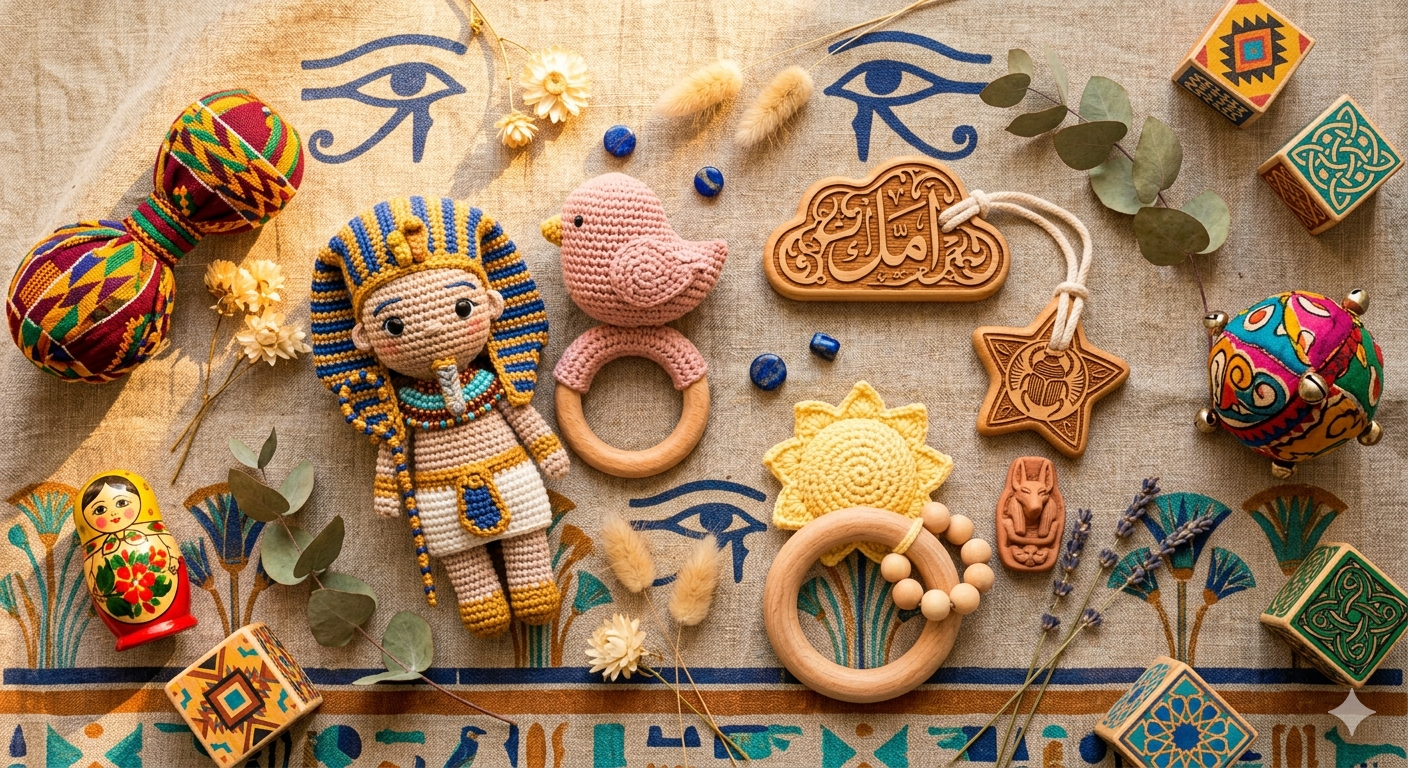
Traditional Dolls and Figures: Dolls representing cultural dress, historical figures, or folkloric characters introduce children to cultural aesthetics and stories. Egyptian pharaoh dolls, for example, connect children to ancient heritage while providing imaginative play opportunities. Peekadoo offers handmade crochet dolls featuring traditional Egyptian elements crafted by local artisans using techniques passed through generations.
Textile Toys with Cultural Patterns: Toys incorporating traditional textile patterns—geometric designs, cultural symbols, or heritage colors—provide visual connection to culture. A crochet rattle featuring Egyptian patterns introduces these designs during play while supporting motor development.
Musical Instruments: Traditional instruments from various cultures—African drums, Asian bells, or Middle Eastern tambourines—introduce children to cultural sounds and rhythms while supporting auditory development and musical appreciation.
Cultural Story Books: Board books telling traditional tales, featuring cultural heroes, or written in heritage languages combine literacy development with cultural education. These become particularly powerful during bedtime routines when repetition reinforces both language and story elements.
Traditional Games: Culturally specific games adapted for babies and toddlers preserve play traditions while supporting development. These games often carry cultural values or teach cultural concepts through play.
Art and Craft Materials: Items supporting creation of traditional art forms—specific weaving looms, particular paint colors, or cultural pattern stamps—allow children to participate in cultural art creation as they develop fine motor skills.
Choosing Authentic Cultural Toys
With increased interest in cultural toys comes increased risk of cultural appropriation and inauthentic representations. Knowing how to identify genuine cultural items protects against supporting problematic practices.
Artisan Origin: Authentic cultural toys are ideally made by artisans from the culture being represented. This ensures accurate representation while supporting the cultural community economically. Peekadoo exemplifies this—their Egyptian-themed toys are actually made in Egypt by Egyptian artisans rather than being culturally-inspired items produced elsewhere.
Cultural Consultation: If artisans from outside a culture create cultural toys, they should work in genuine collaboration with cultural community members who guide accurate, respectful representation.
Accurate Representation: Cultural symbols, patterns, and characters should be accurately portrayed rather than stylized beyond recognition or combined inappropriately. Research or consult with cultural knowledge holders to verify accuracy.
Appropriate Context: Cultural elements should be used in culturally appropriate contexts. Sacred symbols belong in toys only if the culture considers this respectful. When in doubt, consult with cultural community members.
Fair Compensation: Authentic cultural toys should benefit the culture being represented through fair wages for artisans, contributions to cultural preservation efforts, or support for cultural communities.
Cultural Toys for Various Heritages
Every culture has traditional elements that can be incorporated into developmentally appropriate baby toys.
African Cultures: Traditional textiles like kente cloth, mudcloth, or kitenge fabrics can create beautiful toys. West African wooden rattles, dolls in traditional dress, or toys featuring Adinkra symbols all connect children to rich cultural heritage.
Asian Cultures: Japanese kimono patterns on fabric toys, Chinese zodiac animals, Indian block-print fabrics, or Southeast Asian weaving patterns provide cultural connection. Traditional Asian instruments adapted for babies support both cultural and musical development.
Latin American Cultures: Bright colors and patterns traditional to various Latin American cultures, dolls in traditional dress, toys featuring traditional motifs, or items incorporating heritage language elements all celebrate vibrant cultural traditions.
Middle Eastern Cultures: Geometric patterns central to Islamic art, traditional Arabic calligraphy, dolls in cultural dress, or toys referencing regional folklore connect children to Middle Eastern heritage. Egyptian toys might feature hieroglyphics, pharaonic elements, or traditional geometric patterns.
Indigenous Cultures: Authentic Indigenous toys should come from Indigenous artisans who determine what elements are appropriate for commercial production. Many Indigenous communities create beautiful toys incorporating traditional materials and designs while maintaining respect for sacred elements.
European Cultures: Folk art patterns, traditional Scandinavian designs, Celtic motifs, or other European cultural elements can create meaningful connections for children with European heritage.
Incorporating Cultural Toys Into Daily Life
Owning cultural toys matters less than how they’re used and discussed.
Storytelling Accompaniment: Share the stories behind cultural toys. Explain what patterns mean, who characters represent, or what traditions the toy embodies. This narrative context transforms toys from mere objects into teaching tools.
Language Learning: Use cultural toys as opportunities for heritage language practice. Name the toy in heritage language, describe colors or actions using heritage vocabulary, or tell stories about the toy in the native language.
Cultural Celebrations: Highlight cultural toys during relevant holidays or cultural celebrations. This reinforces connections between toys, culture, and meaningful family practices.
Everyday Integration: Rather than treating cultural toys as special occasion items, integrate them into regular play rotation. This normalizes cultural elements as natural parts of daily life rather than exotic special circumstances.
Intergenerational Connection: When grandparents or other family elders visit, encourage them to interact with children using cultural toys as prompts for sharing stories, teaching language, or explaining cultural traditions.
Cultural Toys in Multicultural Families
Families blending multiple cultural backgrounds face unique considerations with cultural toys.
Balanced Representation: Ensure all cultural backgrounds in the family receive representation in toy selection. Children should see themselves reflected across their complete heritage.
Explaining Complexity: As children grow, cultural toys from multiple backgrounds provide concrete prompts for discussing family’s multicultural nature. Toys become entry points for conversations about identity and belonging.
Cultural Respect: Teach children to respect all aspects of their heritage equally. Avoid hierarchical treatment of cultures that might communicate that one cultural background matters more than others.
Integration vs. Separation: Some families prefer clearly delineating cultural elements; others integrate them. There’s no single right approach—choose what feels authentic to your family’s multicultural reality.
Cultural Toys for Diaspora Families
Families raising children far from cultural homelands face particular challenges that cultural toys help address.
Maintaining Connection: When extended family, cultural community, and homeland are geographically distant, cultural toys provide daily tangible connections to heritage that might otherwise feel abstract to young children.
Combating Assimilation Pressure: In diaspora, dominant culture often overwhelms heritage culture. Cultural toys resist this pressure by asserting that heritage culture has equal value and presence in children’s lives.
Creating Cultural Environment: When the surrounding environment doesn’t reflect your culture, curating a home environment rich in cultural elements through toys, art, music, and books becomes especially important.
Community Building: Cultural toys can facilitate connection with other diaspora families sharing heritage. Shared cultural elements create conversation starting points and bonding opportunities.
Educational Value Beyond Culture
Cultural toys provide developmental benefits that extend beyond cultural connection.
Diverse Aesthetics: Exposure to varied cultural aesthetic traditions supports visual development and artistic appreciation. Children learn that beauty takes many forms across cultures.
Problem-Solving Variety: Different cultures approach problem-solving, play, and learning differently. Cultural toys expose children to these varied approaches, supporting cognitive flexibility.
Sensory Diversity: Cultural materials—specific fibers, woods, natural dyes—provide sensory experiences different from mainstream toy materials, enriching sensory development.
Fine Motor Skills: Many cultural toys use traditional crafting that creates unique grips, movements, or manipulations, supporting fine motor development through varied challenges.
Avoiding Cultural Appropriation
Supporting cultural toys requires understanding the distinction between appreciation and appropriation.
Purchase from Source: Buying cultural toys from makers within that culture ensures economic benefit flows to the appropriate community and representation is authentic.
Respect Sacred Elements: Not all cultural elements belong in commercial toys. Sacred symbols, religious items, or culturally protected designs should not be commodified regardless of who profits.
Accurate Representation: Cultural elements should be portrayed accurately, not stylized beyond recognition or combined inappropriately with elements from other cultures.
Credit Cultural Origins: When sharing cultural toys, acknowledge their cultural source. Don’t present cultural elements as universal or attribute them to wrong cultures.
Creating Cultural Toy Collections
Building meaningful cultural toy collections requires intention and strategy.
Quality Over Quantity: A few authentic, well-made cultural items provide more value than many lower-quality pieces. Focus resources on items that will last and truly represent cultural traditions.
Diverse Categories: Include varied types of cultural toys—dolls, books, instruments, art supplies—to provide multiple entry points for cultural engagement.
Age Progression: Build collections that grow with children. Some items work for infants; others emerge as children develop. Planning across ages ensures continuous cultural connection.
Balance Function and Symbolism: Include both toys used daily for play and special items reserved for cultural occasions or teaching moments. Both serve important but different purposes.
The Impact of Cultural Representation
Research increasingly confirms that cultural representation in children’s environments matters profoundly.
Seeing themselves and their culture reflected positively contributes to academic achievement, self-esteem, and social-emotional wellbeing. Conversely, absence of cultural representation or negative stereotyping creates risks for identity development and self-concept.
Cultural toys provide one accessible way families can ensure children grow up seeing their heritage valued, represented, and preserved. This daily visibility matters as much as or more than occasional cultural celebrations.
Conclusion: Heritage Through Play
Cultural baby toys do more than entertain or decorate nurseries. They connect children to history, tradition, and identity from their earliest days. They preserve cultural knowledge through active use rather than passive observation. They affirm that cultural heritage matters enough to incorporate into daily life.
Whether you’re sharing the culture you grew up in or introducing children to heritage they might otherwise lose connection to, cultural toys provide tangible, playful links to the past that shape identity for the future.
Every handmade Egyptian crochet toy, every traditional pattern, every cultural story told through play is a gift of heritage—helping children understand not just who they are, but where they come from and what traditions they carry forward.
Why Us
Skill-Building Design
Handmade toys and essentials that support fine motor skills, hand-eye coordination, and sensory play.
Natural & Safe Materials
Soft, breathable cotton and bamboo yarns—gentle on babies and made with care.
Impact With Every Purchase
We empower women artisans and create responsible products aligned with key SDGs.